“It’s the battle I choose to fight.”
A friend and I were discussing mealtime behaviors with our children recently. She shared how her kids sit at the table for long, extended times, slowly working their way through every item of food set before them. It’s a high priority for this friend of mine that her children eat nutritious meals, and she’s trained them well. Before a few months ago, let’s just say there was a lot of room for improvement at mealtime in the Tietz’s household. Getting our children to sit longer than a few minutes and eat the food in front of them without complaining felt an impossible task, not to mention respecting prayer time before meals, not saying potty words at the table, picking fights with one another–the list goes on.
We wanted mealtime to look different. We spent the season of Advent choosing to fight the mealtime-behavior battle to teach our kids how to sit still and act respectfully from prayer through happy plate. We are far from perfection, but we’ve made a lot of improvement. I tell this story not to highlight mealtime, but the why behind this change. Turns out, it’s not just so they eat more vegetables or obey the rules.
We have a different motivation. When we made this decision, we had relationships in mind.
THE WHY.
We want to raise children who freely choose to love God and love each other.
We desire mealtime to be a place not just where we come to eat but where we come to be together. We desire mealtime to be a place where, at least once a day, we sit and pray together as a family. We thank God for “the food before us, the family and friends beside us, and the love between us.” We acknowledge that it is God alone who is the source of this great provision we have. As we share a meal together, we check in on each other’s days, how one another is doing, and enjoy one another’s company.
As we set these new standards for mealtime, there is one important distinction that I am making for myself: the goal is not obedience. The goal is relationship. Kevin and I desire to cultivate deep relationships with our children and help them have deep relationships with one another (their siblings).
As I prepare to make the transition into having four children, I admit that I often spiral into survival mode and parent from a place of exhaustion. If only my children obeyed, then I wouldn’t feel so overwhelmed! Life would be easier! How dare they do not obey. They should know better! After everything I do for them! However, this only leads to parenting out of a place of bitterness, entitlement, and anger – barking commands at my children that bear no fruit.
The Holy Spirit convicted me recently that rules for the sake of obedience is not the way I want to operate. I want to parent differently. I want to parent with the why in mind.
Parenting with the why in mind will lead to another question: what are the battles I choose to fight? We can’t fight them all as parents and keep our sanity. How do we choose? The most important battles to me, though I hadn’t put these words to it yet until recently, are their treatment of one another and of their mom and dad.
So while I fight those battles of sibling rivalry and respect, I want to make sure they understand the vision and not just the command.
For example, as my daughters hit and claw at one another over a disagreement, I don’t simply what to say, “do this” or “stop that.” Yes, that is important, especially in the early years. But as they get older, I want to give them a vision of something greater. I want them to desire a restored relationship with one another. I want them to learn kindness, genuine forgiveness, and working through conflict. I want to them to not just listen to mom, but to have a genuine friendship with one another. I want them to take ownership of their own relationships.
My children having healthy relationships with mom and dad and with each other will dictate the battles I choose to fight, and how I fight them. This will trickle into other areas—like honoring mealtime and family time, for example. With the end in mind, my hopes are that one day, they will become adults with healthy, independent relationships with their parents and with one another, healthy marriages and/or friendships, and that they might have the tools to freely choose a relationship with their Heavenly Father.
DIFFERENT CHILDREN. SAME WHY.
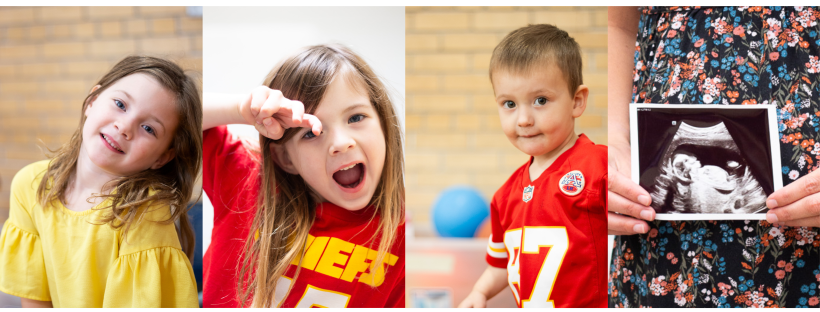
With four children, not to mention two girls and two boys, each child will need to be parented differently. But for each child, the why will be the same.
For Lydia, my strong-willed, justice-oriented first born – she needs to learn how to extend grace both to others and to herself. More than anything, she hates failure and desires perfection. She is high achieving and holds others to the same standard she holds herself. (Some days it’s like looking in a mirror – now I feel like I am talking about myself!) She is also highly motivated to obey when she sees a reward for herself on the other side.
As I parent Lydia, I need to not manipulate her behavior by only using rewards-based parenting. I need to help her to see her behavior through a lens of empathy and compassion for others. She needs help to persevere in the face of failure. As a practical thinker and a verbal processor, we need to give her space to understand and process the “why.” She needs encouragement and praise as she restores relationships and places others first. She needs physical outlets to release aggressive energy, which will help her with empathy and reason. She will need to face failure and imperfection to realize her need for and dependency on God.
For Eliza, my free-spirited, affectionate, “closet”-perfectionist – she isn’t going to demand answers. She could cuddle her mom or dad all day and all night if that were possible. She seems to be enjoying a game or activity freely with no spoken anxiety, and then at the last moment realizes failure and explodes on anyone around her, refusing to ever engage in the task again. She could hide from negative emotions and feelings, living in her own pretend world all day, singing songs, and making jokes, if we let her. She is not motivated by tasks but motivated by affection and positive experiences.
As I parent Eliza, she needs more of my quiet presence and reassurance that she is loved exactly as God made her. I will have to fight harder to create opportunities to show her the “why” and pray for opportunities for her heart to be open. She needs to be asked key questions that will help her process failure, motivations, and the hard realities of life that she will naturally hide from. She needs to be built up in her unique gifts without comparison to her sister. She needs space to express her creativity and know that we see her, and we are proud of her.
For Caleb, I am still getting to know my precious son. Outside of teaching him basic rules of life and boundaries, specifically for his own safety, I have gotten glimpses of who he might be. Like his dad, he loves to play, read, and learn. And at age 2, I’m starting to see gifts of empathy and mercy come out of him. Here’s a recent example:
A few weeks ago in the midst of a snowy driveway, I was trying to load him in the car, and he was running inside in laughing disobedience. “CJ, no!” I said sternly. “Come back, time to get in the car!” As he was laughing and headed for the basement, I began to chase after him and my wet boots slipped on our entryway tile and I – third trimester pregnant and all – wiped out on the floor. Anyone who has ever fallen while pregnant knows that it not only hurts, but it’s just terrifying. As I laid on the floor fighting back tears, Caleb’s entire demeaner changed. My 25-month-old son turned around and walked to me slowly, bent down and put his face next to mine. With tender hazel eyes and a sweet voice, he said, “OK, mommy? OK?” I took a deep breath, pushed my way up, received his hug, and responded, gently asking him to get in the car. That boy turned right around and walked to the car and climbed in his car seat by himself. That was the first time I realized he has more of his dad in him than just hazel eyes.
Lord as I get to know Caleb more in the coming years, please show me what he needs. I also thank you for a Christ-loving husband who will understand how to talk to him as a boy and as a man, and how to cast vision to him to honor is mom and his sisters and to honor the Lord. Our world needs strong men who love Jesus and lead their families. Lord may Caleb learn how to walk with you by watching his dad as an example. Give him the courage and strength to strive for that in his own life!
I pray similar prayers for Adrian, my second son that we have not yet met, due in just six weeks. All I know about him now is he is big, and he is active! He is constantly drawing my attention to him with his long limbs and frequent movements. He’s been my most active pregnancy yet and I’m receiving extra monitoring and sonograms because of his size! I don’t yet know what he will need, but one thing I know for sure is that it will be different than his sisters and different than his brother.
All four of my children will need different things from Kevin and me, but we have the same goal for each: that they would freely choose to love God and love each other. While this decision to follow God will be their own choice, we hope to set them up for this by fostering trusted, healthy relationships with their parents and their siblings – not because we gave them what they wanted at every demand – but because among hard decisions and hard discipline, we had a consistent “why” that could be repeated. The bottom line: we put relationships first.
In as much as we can control, we desire a relationship with each child that is not one of co-dependence, but of independence, that sets them up to know Jesus for themselves and not just through their parents’ faith. I echo the words of Andy Stanley in his book Parenting: Getting It Right that the end goal is emotionally healthy, relationally successful adults, equipped to handle on their own the difficulties and blessings of life.
The battles I will choose to fight are their relationships – with mom, dad, siblings – in a way that teaches them how to manage future relationships outside of their family – and ultimately as they come of age, their relationships with Jesus. May decisions to discipline, correct, show grace, and how I speak have these relationships in mind.
–
Lord, help me to change the way I parent my children. Not to achieve anything but in a genuine effort to have a “why” as the driving force of my every interaction with my children – especially as they get older. Lord as I reflect on each child, I pray that you would guide me into a place of listening and discernment for what each child needs. That I will parent my four children each differently but with the same “why.” The same “it.” I don’t simply desire obedient and high achieving children – I desire children who know they are loved, can love others, and – ultimately – come to know, love, trust, and follow You. Help me parent from this place and with this goal in mind. Lord, please guide Kevin and me to parent in unity. I surrender expectations and daily failures to you. May I seek their forgiveness and seek to restore the relationship when I do wrong. May Kevin and I model a healthy relationship in our own marriage and in the way we follow You. These children are yours. Thank you for the gifts that they are to me. Please lead me.
 rise redeemed